
Roofs That Survive Carolina Weather Events
Storm Damage Roof Repair in Columbia for properties with wind-lifted shingles, granule loss, and structural impact from fallen debris
Wind events across the Midlands can peel back shingles, crack seal strips, and scatter granules across gutters before you notice any interior leaks. Goodwin Roofing handles storm damage roof repair in Columbia when high winds compromise the barrier between your structure and the next weather system. You need this service after severe thunderstorms, tropical systems, or any event that leaves visible shingle displacement, exposed underlayment, or tree limbs resting on your roof plane.
The work begins with a complete surface inspection to identify both visible displacement and hidden bruising that weakens shingle integrity even when adhesive strips remain intact. Bruises from hail or debris create soft spots that accelerate granule loss and allow UV degradation to penetrate the mat faster than standard aging, cutting expected lifespan by years if left unaddressed. Structural repairs address damaged decking, fractured trusses, and penetration points where limbs punched through multiple layers.
Schedule a detailed inspection to document all wind and impact damage before the next storm cycle arrives.
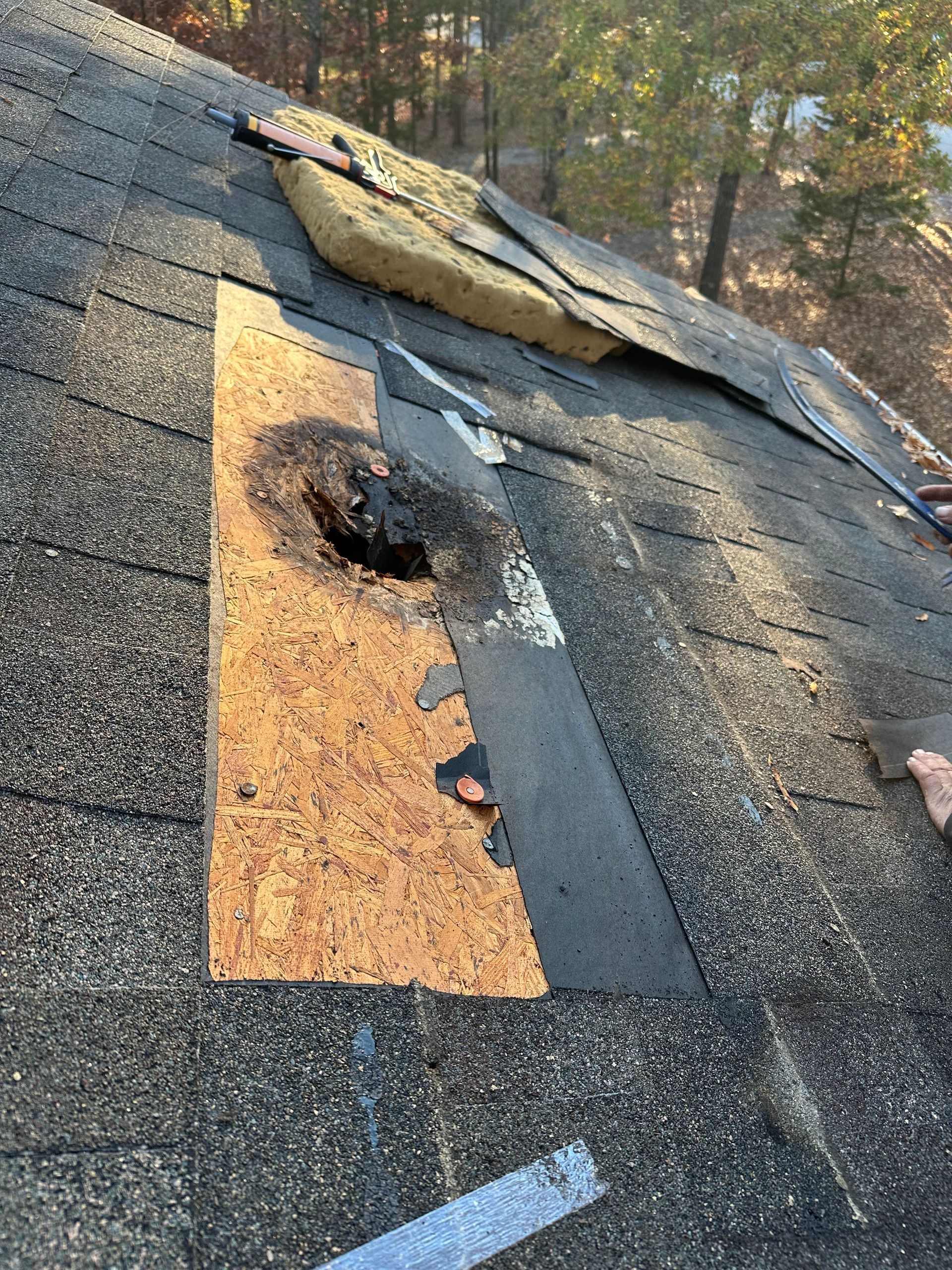
What Proper Storm Repair Requires
Proper storm repair involves replacing entire sections of damaged shingles rather than spot-patching individual tabs, ensuring new material integrates with existing starter courses and maintains uniform seal activation across the repaired zone. Underlayment gets evaluated for tears or water infiltration that occurred during the event, and any compromise requires replacement before new shingles go down to prevent trapped moisture from rotting decking.
After repairs finish, you notice consistent color across the replaced area with no lifted edges or exposed fasteners, gutters clear of excessive granule accumulation, and attic spaces remain dry during subsequent rain events. The repaired sections lie flat without bubbling or wrinkling, and flashing around penetrations sits flush without gaps where wind-driven rain can enter.
Temporary mitigation includes tarp installation secured with fasteners driven into sound decking and weighted sandbags placed along ridge lines to prevent billowing until permanent materials arrive. This step prevents active leaks from spreading to ceiling drywall, insulation, and electrical systems while final repairs get scheduled and materials get sourced to match your existing roof profile.
Answers to Frequent Service Questions
Storm damage often creates problems that remain invisible from ground level, and property owners across Columbia typically ask similar questions before scheduling repairs.
What does granule loss indicate after a storm?
Granule loss signals that impact force compressed the asphalt mat underneath, creating weak points where water penetrates faster than across undamaged sections, and shingles in those zones fail years earlier than the surrounding roof even if no cracks appear immediately.
How do you identify hidden bruising on shingles?
Inspectors walk the roof surface checking for soft spots that flex under pressure, discoloration where granules separated from the backing, and circular impact patterns that match hailstone diameter or debris contact points, all of which compromise weatherproofing before leaks become visible inside.
When should temporary tarps be installed after wind damage?
Tarps go up immediately when shingles are missing or displaced enough to expose underlayment or decking, preventing rain from entering the structure during the days or weeks between damage occurrence and final repair completion, especially during Columbia's frequent afternoon thunderstorm season.
What structural damage requires more than shingle replacement?
Fallen tree limbs that penetrate the roof plane often crack rafters, split decking panels, and compromise truss connections, requiring carpentry work to restore load-bearing capacity before any roofing material gets installed over the affected area.
How does wind damage differ from aging wear?
Wind lifts shingles by breaking seal strips and bending tabs backward, creating sudden exposure rather than gradual deterioration, and the damage concentrates along roof edges, ridges, and areas near tall trees rather than spreading uniformly across all slopes like standard UV aging.
Goodwin Roofing provides storm damage documentation that includes photographs of all compromised areas and repair scope details needed for insurance claims. Request an assessment within days of any significant weather event to prevent secondary damage from developing before repairs begin.